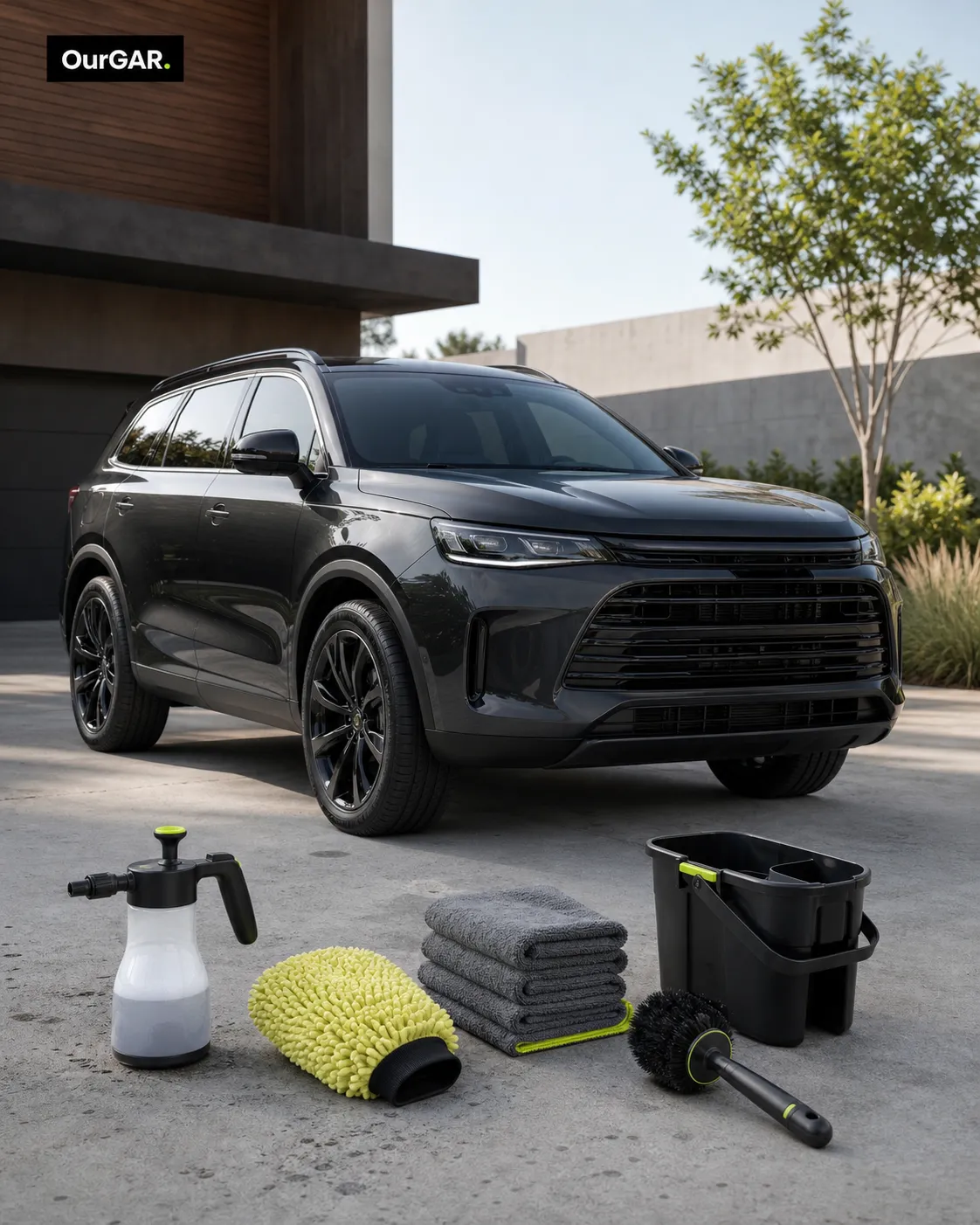
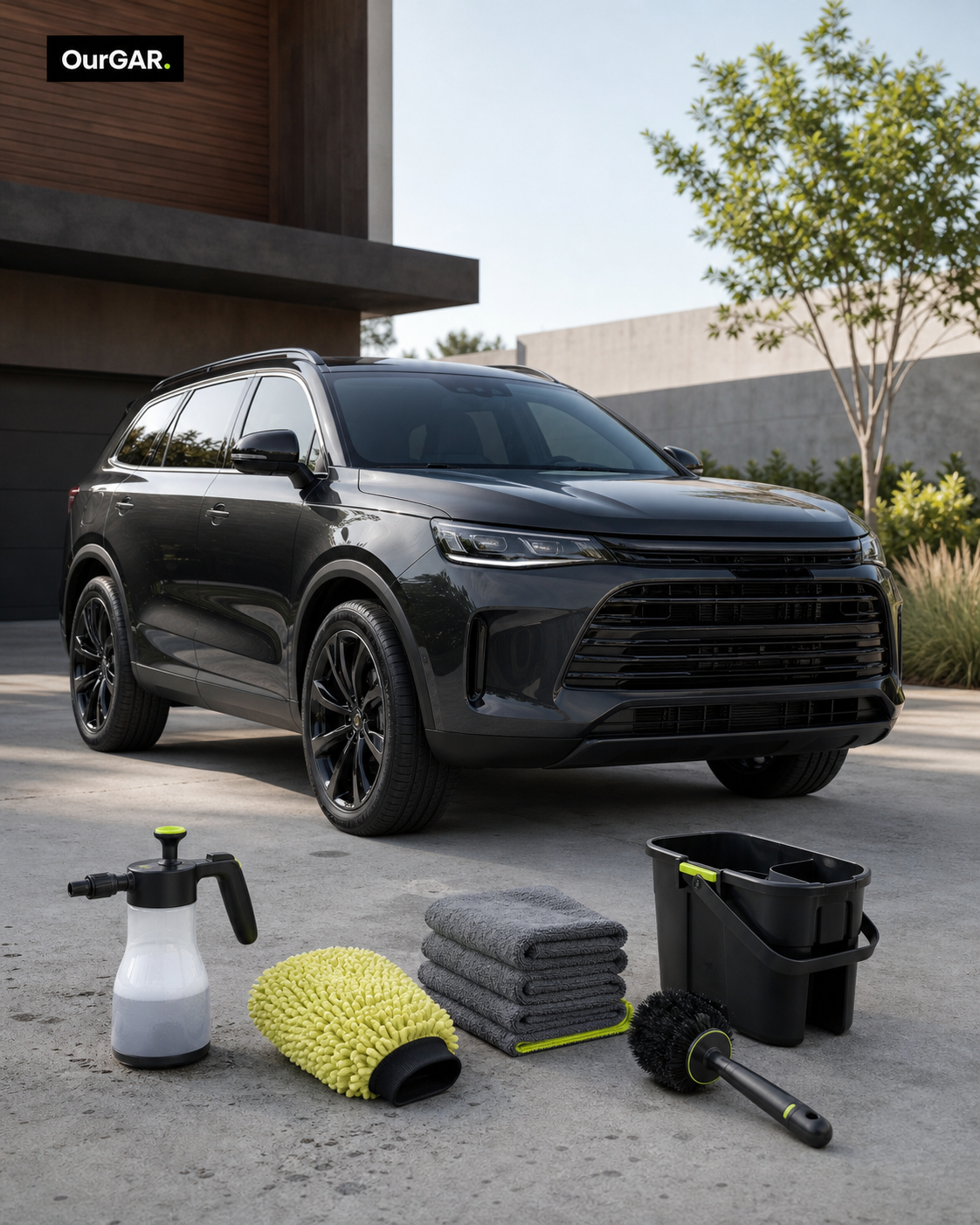
For a first DIY car wash, you do not need to buy a pressure washer, foam cannon, and every brush in sight. Start by covering four jobs—cleaning, contact washing, drying, and wheel care—then add equipment only when it suits your water supply, vehicle, or storage needs.
Start with four core tools
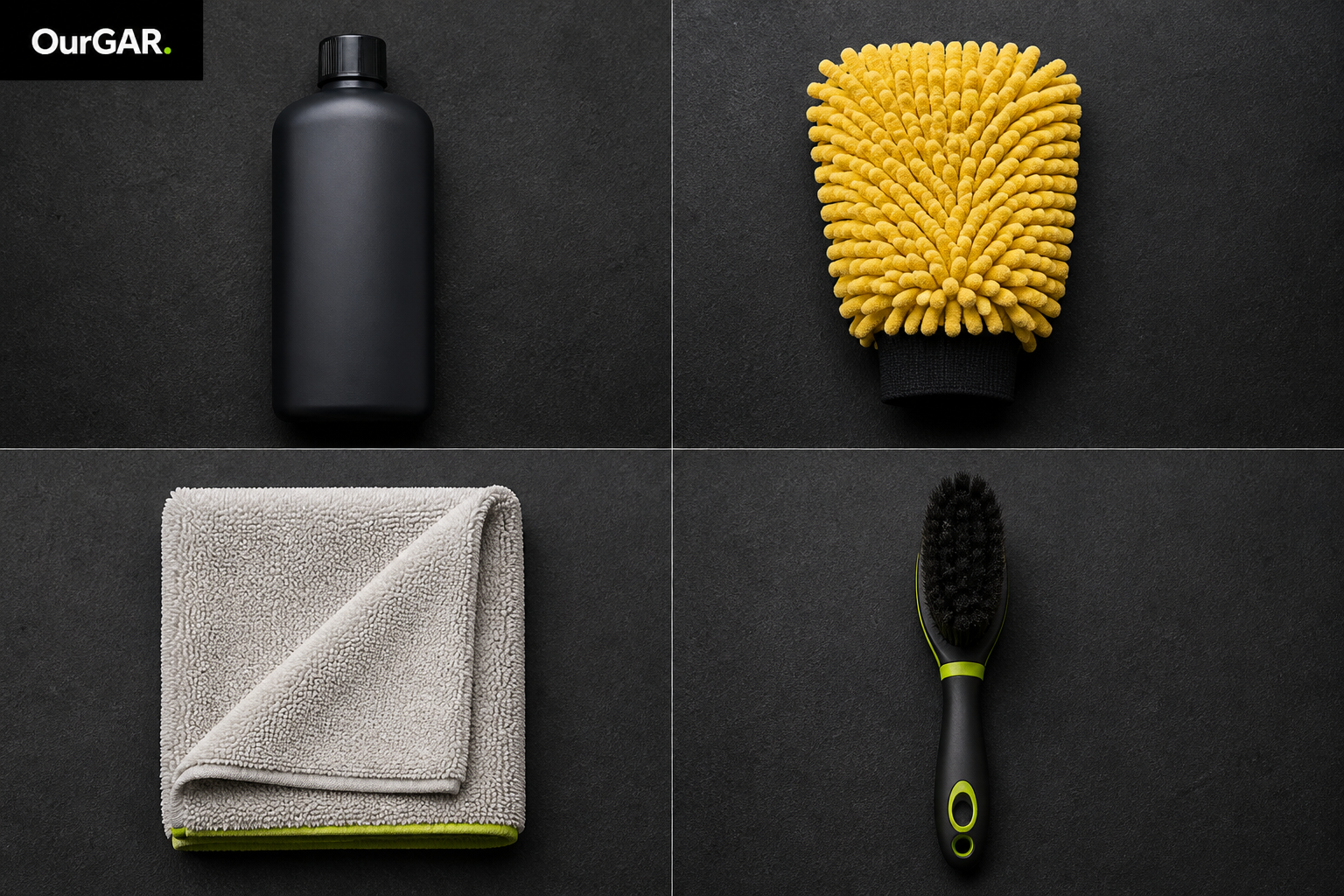
These four categories are a practical place to begin:
- Car wash soap: Use it for routine cleaning and follow the mixing directions on the bottle.
- A soft wash mitt: This is your tool for contact-washing the painted body panel by panel.
- A microfiber drying towel: Dry soon after rinsing to keep water from sitting on the finish.
- A dedicated wheel brush: Wheels collect heavier grime, so their tools should stay separate from paint tools.
You do not need a new bucket if you already have a clean one. Use what you have to hold wash solution or rinse your mitt. When the budget is tight, giving each of these four jobs its own tool is more useful than buying several upgrades first.
Keep a wheel brush or wheel mitt separate from the tools you use on painted panels.
Choose the rest of your kit by how you wash
Think about extra gear in three layers:
| Layer | Gear | When it makes sense |
|---|---|---|
| Core | Car wash soap, wash mitt, microfiber drying towel, wheel brush | Worth having for a first DIY wash |
| Upgrade | Pressure washer, foam cannon, foam gun, long-handled brush | Add when your water setup or reach calls for it |
| Convenience | Carry bin, storage box, small organizer bags | Useful for self-service wash bays or a faster setup |
A foam cannon needs a compatible pressure washer. If you are working from a standard garden hose, a foam gun is the more natural match. Both are there to put a pre-wash layer over the vehicle; they do not replace the contact wash that follows.
A long-handled brush is optional, too. Consider one if the roof or another high area is consistently out of reach. If you can comfortably reach the area with a wash mitt, there is no need to buy it just to complete the kit.
Put each tool in the right step
An easy DIY wash follows this order:
- Pre-rinse: Rinse away loose sand, dust, and debris before touching the paint.
- Apply foam or wash solution: Use a foam cannon or foam gun if you have one; otherwise, use wash soap as directed.
- Contact-wash in sections: Start with the cleaner upper panels, work panel by panel, and rinse the mitt as you go.
- Final rinse and dry: Do not let foam dry on the paint. Rinse thoroughly, then dry with a clean microfiber towel.
Work in the shade when you can, or finish and rinse one section at a time. That keeps foam from drying too quickly and makes it easier to keep the mitt clean.
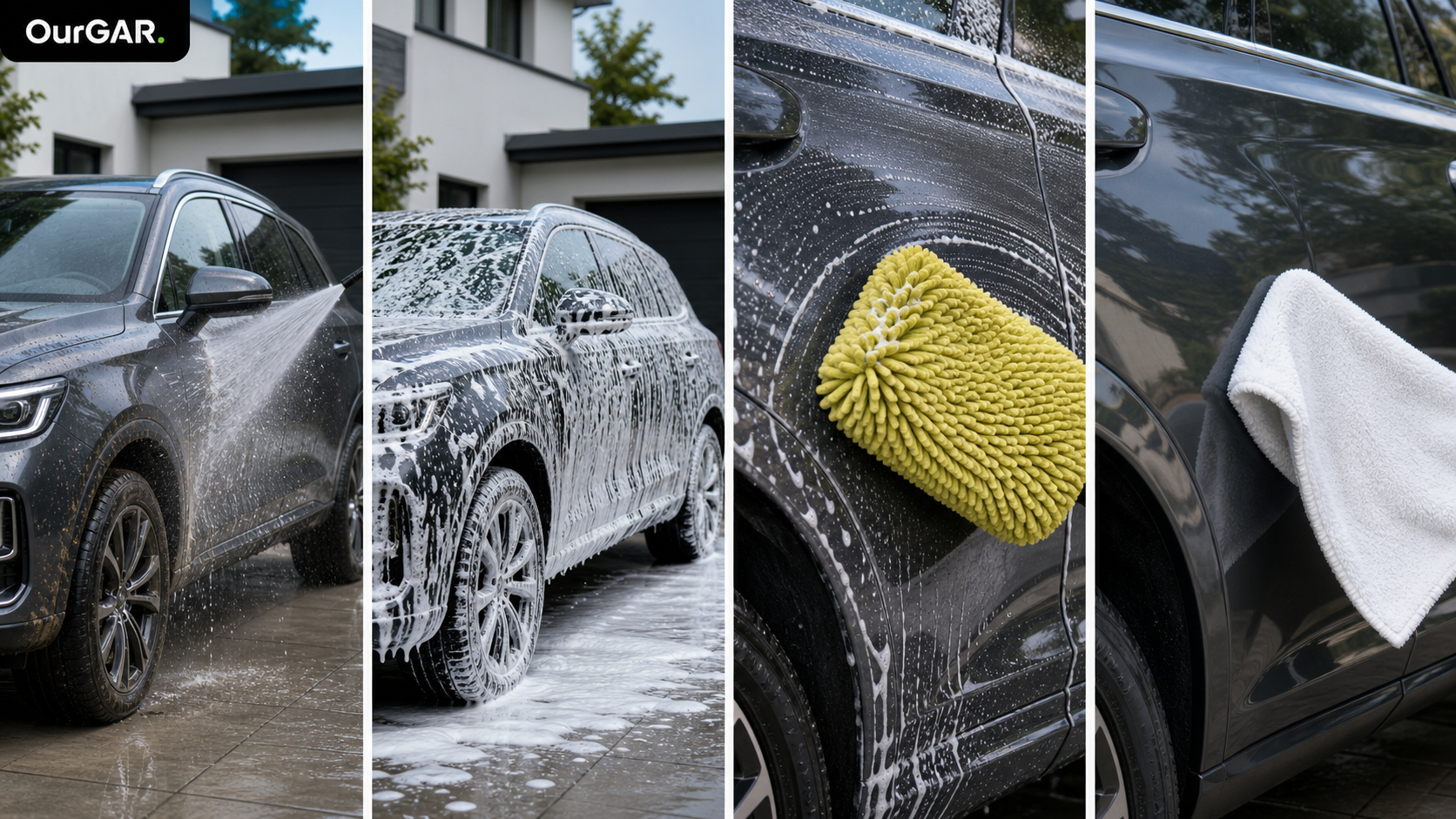
Before buying foam equipment, check your water supply and make sure the fittings are compatible with the equipment you already own.
Five easy mistakes to avoid
- Mixing paint and wheel tools: Wheel areas carry heavier grime, so separate tools help keep that grime away from painted panels.
- Skipping the pre-rinse: Rinsing loose particles away first makes the contact-wash step easier to manage.
- Never rinsing the mitt: Rinse it during the wash instead of letting grime stay in the fibers.
- Letting foam dry on the paint: On hot or windy days, wash and rinse in smaller sections.
- Drying the body with a used towel: Keep drying towels clean and soft; store used towels and wheel tools separately.
Different towel colors or small storage bags make it easy to separate paint-contact, wheel-cleaning, and drying tools. If your vehicle has a coating or another sensitive finish, check the care directions for that product before choosing a cleaner.
Pack the kit so the next wash is easier
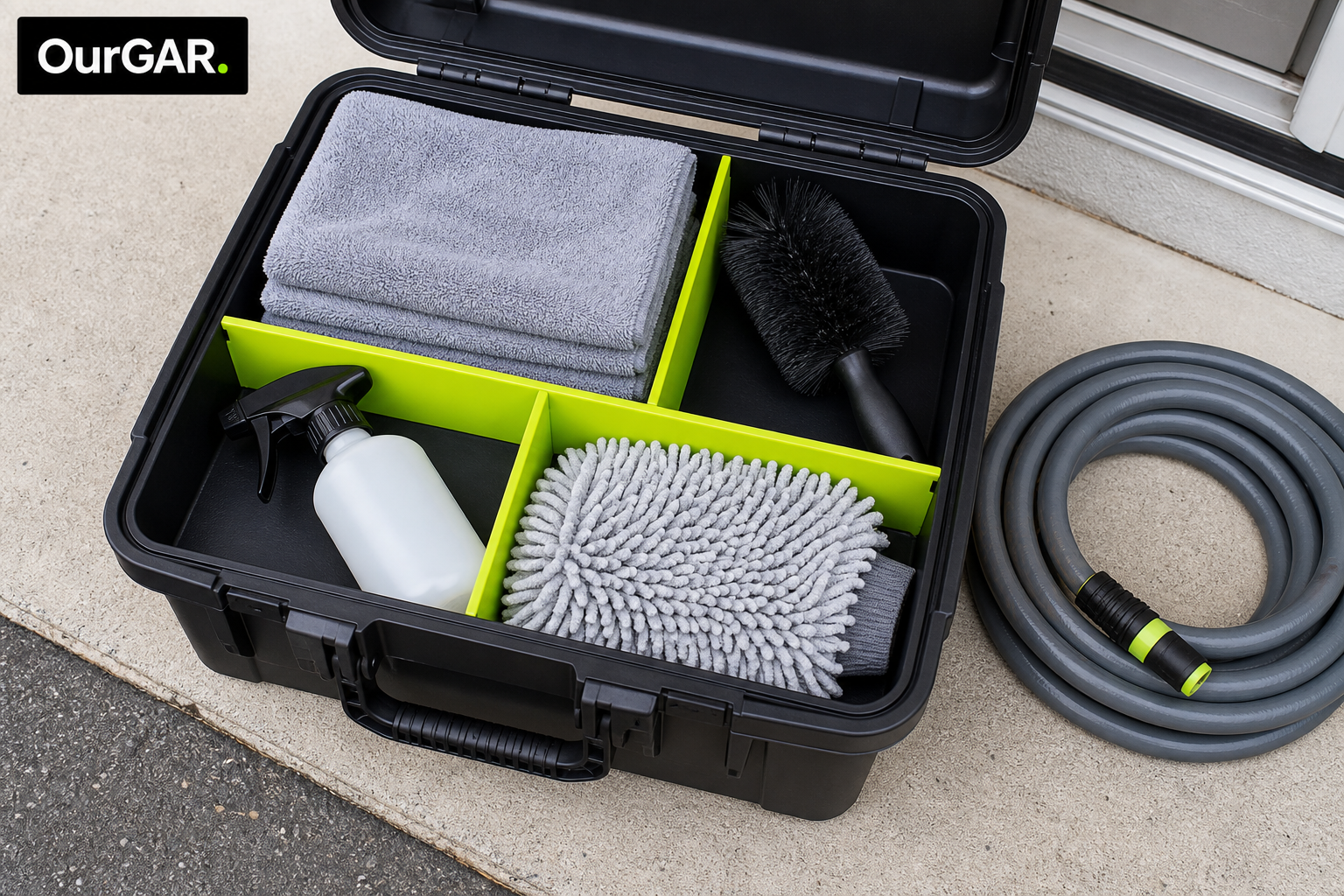
The simplest storage system has three zones:
- Clean zone: Microfiber drying towels, kept in a zip bag or dedicated compartment.
- Paint zone: The wash mitt, car wash soap, and everyday spray bottle.
- Wheel zone: The wheel brush, wheel mitt, and any used damp towels.
This setup makes it easier to leave for a wash bay without hunting for supplies or accidentally grabbing a wheel brush or damp towel. After washing, take used towels and wheel tools out separately, clean and dry them, then put them back. Keep clean drying towels in their own space.